UNDERSTANDING SOCIAL ANXIETY

Why does a simple conversation take so much effort?

You are not “bad with people.” You are caught in a pause that makes every text, conversation and room feel like something you have to get exactly right.

Understanding Social Anxiety looks at how habits like these can develop, with small practices for the moments you’d like to handle differently.

MAYBE YOUR VERSION LOOKS DIFFERENT

It can hide inside very ordinary moments.

Sometimes you’re there, smiling and joining in, while quietly working much harder than anyone realizes.

01 / THE MESSAGE

“Are you coming Saturday?”

You want to go. But you ask who else is coming before you answer. Then you wonder whether that sounded strange.

You type “Yes, sounds good,” add an exclamation mark, remove it, and leave the reply unsent. Now you’re thinking about how long you’ve taken to answer, too.

02 / THE GROUP

You had something to add.

Someone at lunch mentions a show you’ve been watching. You have something to say.

But another person starts talking, so you wait. Then you rehearse how you’ll begin. By the time there’s a gap, they’ve moved on. You smile and keep listening. You wanted to join in.

03 / THE MOMENT AFTER

“Was that a weird thing to say?”

You’re home, changing out of your clothes, when one sentence from earlier comes back.

You replay their expression, then check your messages. Nothing suggests anything is wrong. But you’re still trying to get enough certainty to leave it alone.

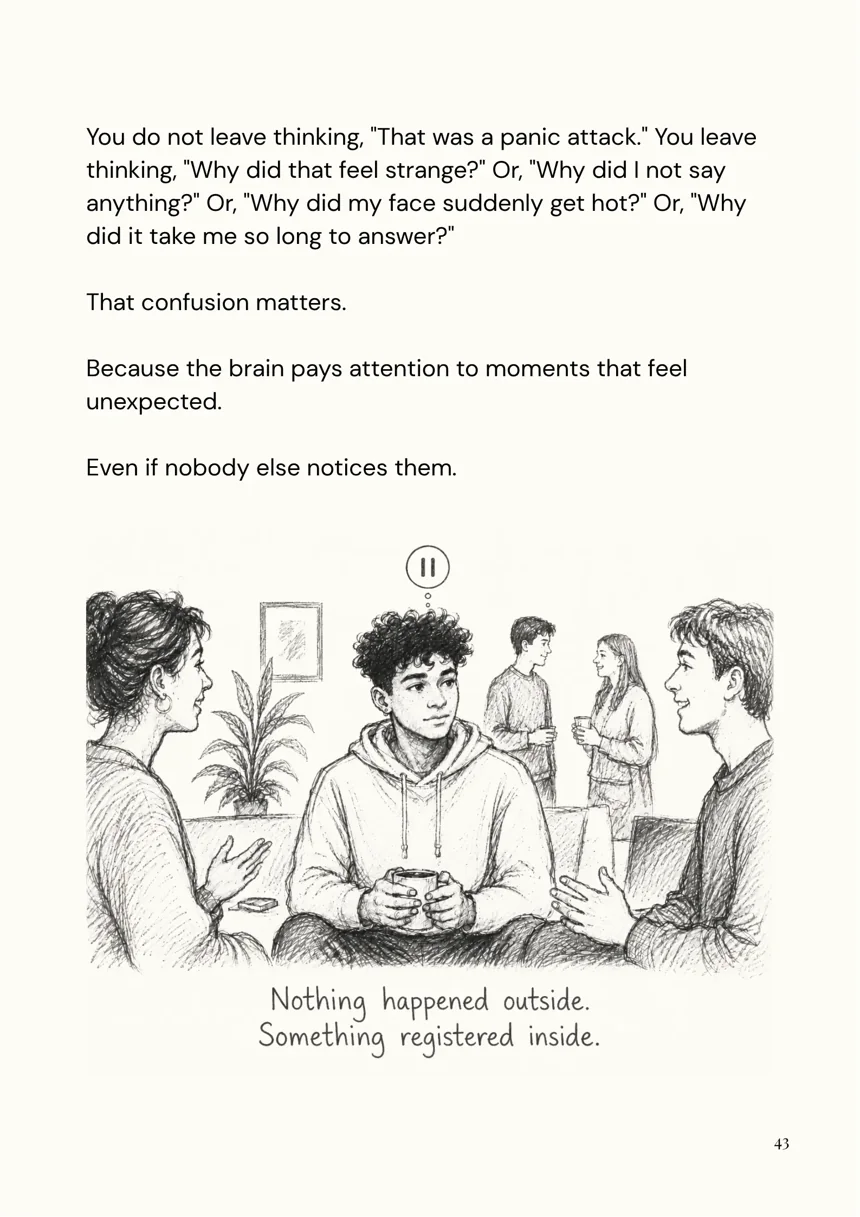
An illustration of people in a group conversation

From the outside, it can look like you’re simply quiet.
Only you know when you wanted to take part.

HOW A HABIT CAN BECOME FAMILIAR

Sometimes the pause starts with a small rule.

Imagine you’re in class. You put your hand up, give an answer, and get it wrong. Someone at the back laughs. The next time you think you know the answer, you wait for someone else to say it first.

Keeping quiet means you don’t have to risk that moment again. After a while, the rule can become: “Only speak when I’m absolutely sure.”

Years later, you might find yourself checking every word in a message or waiting for the perfect opening in a conversation. You’re trying to avoid getting it wrong, even with people who aren’t looking for a mistake. The book looks at learned rules like these and small responses you can practice when the checking gets in your way.

BEFORE YOU SAY IT

“Only speak if I’m sure.”

“Let someone else go first.”

“Check it one more time.”

A simple question.
A lot happening before you ask it.

WHAT A DIFFERENT RESPONSE CAN LOOK LIKE

The question you nearly didn’t ask.

You’re a few weeks into a new job. Someone asks you to update a spreadsheet before a meeting. You open the file. There are two tabs, and you’re not sure which one they mean.

THE FAMILIAR RESPONSE

“They’ve already explained it. What if they think I wasn’t listening?”

So you search old emails and open last month’s file. Half an hour passes. Now you’re worried they’ll ask why it’s taking so long.

You needed one piece of information. Trying to look capable made it harder to get.

ONE RESPONSE TO PRACTICE

“Just checking, should I update the figures on the first tab or the second?”

You might still feel awkward. The practice is asking the question you need to ask, before you feel completely certain about how it will land.

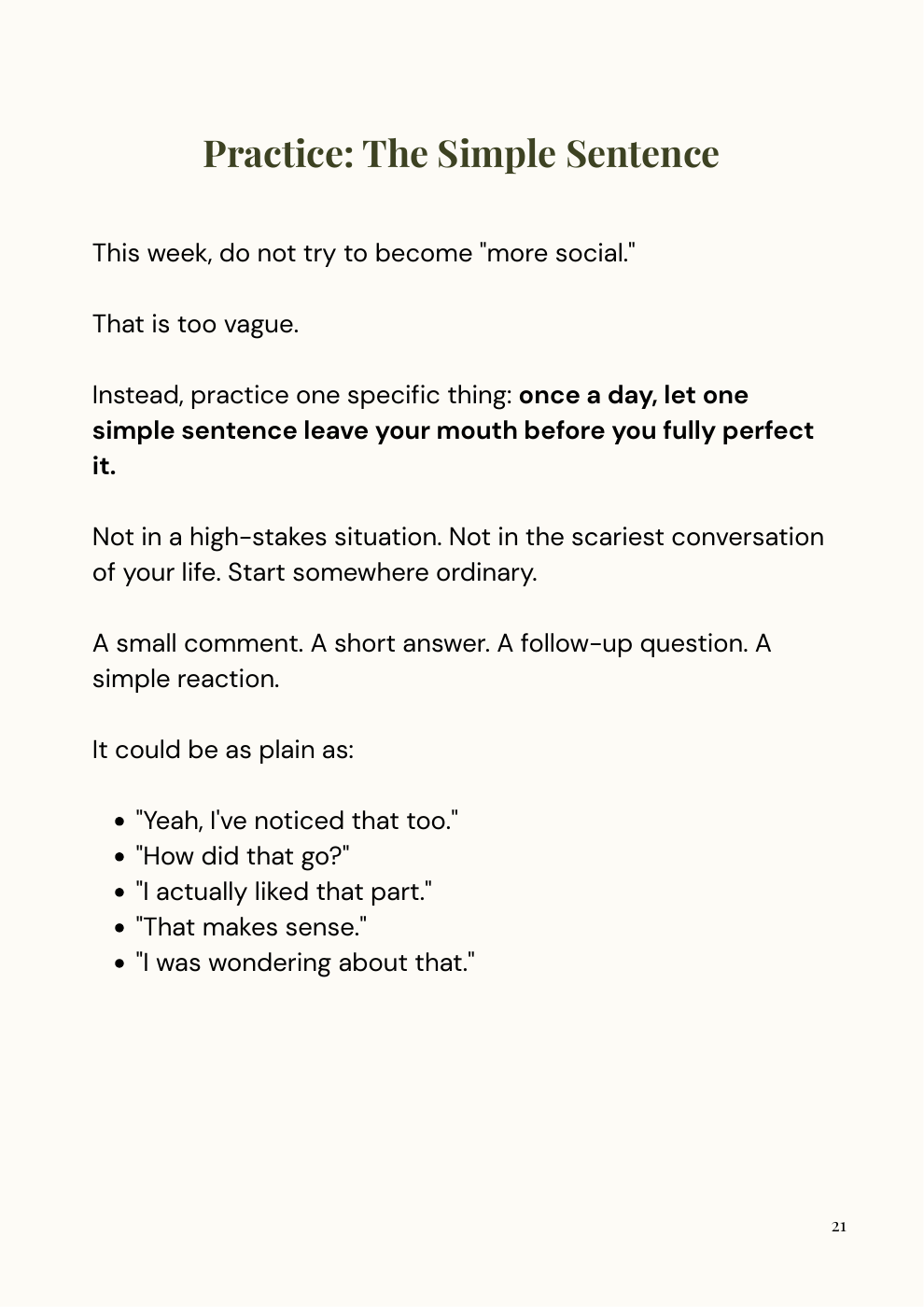
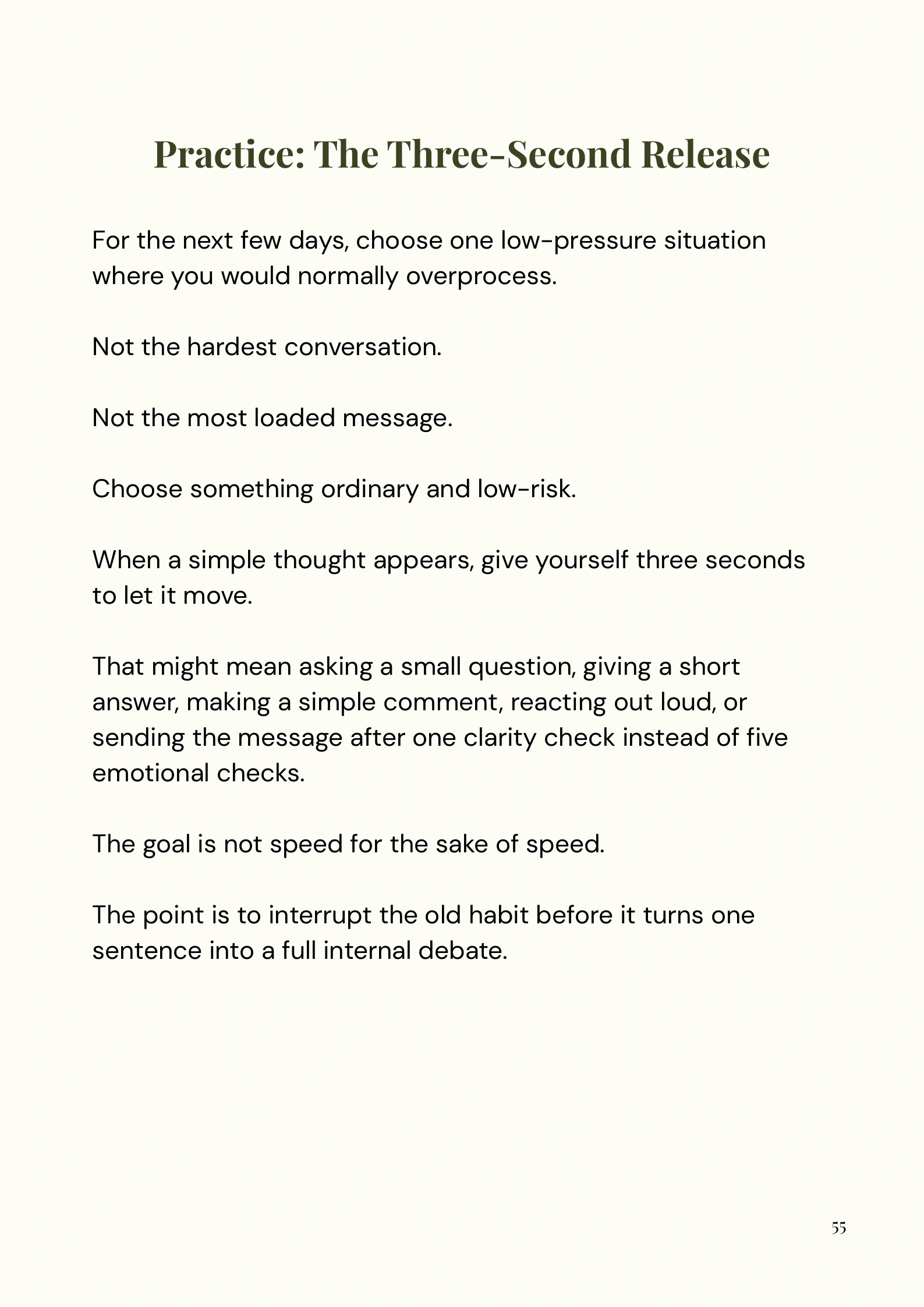
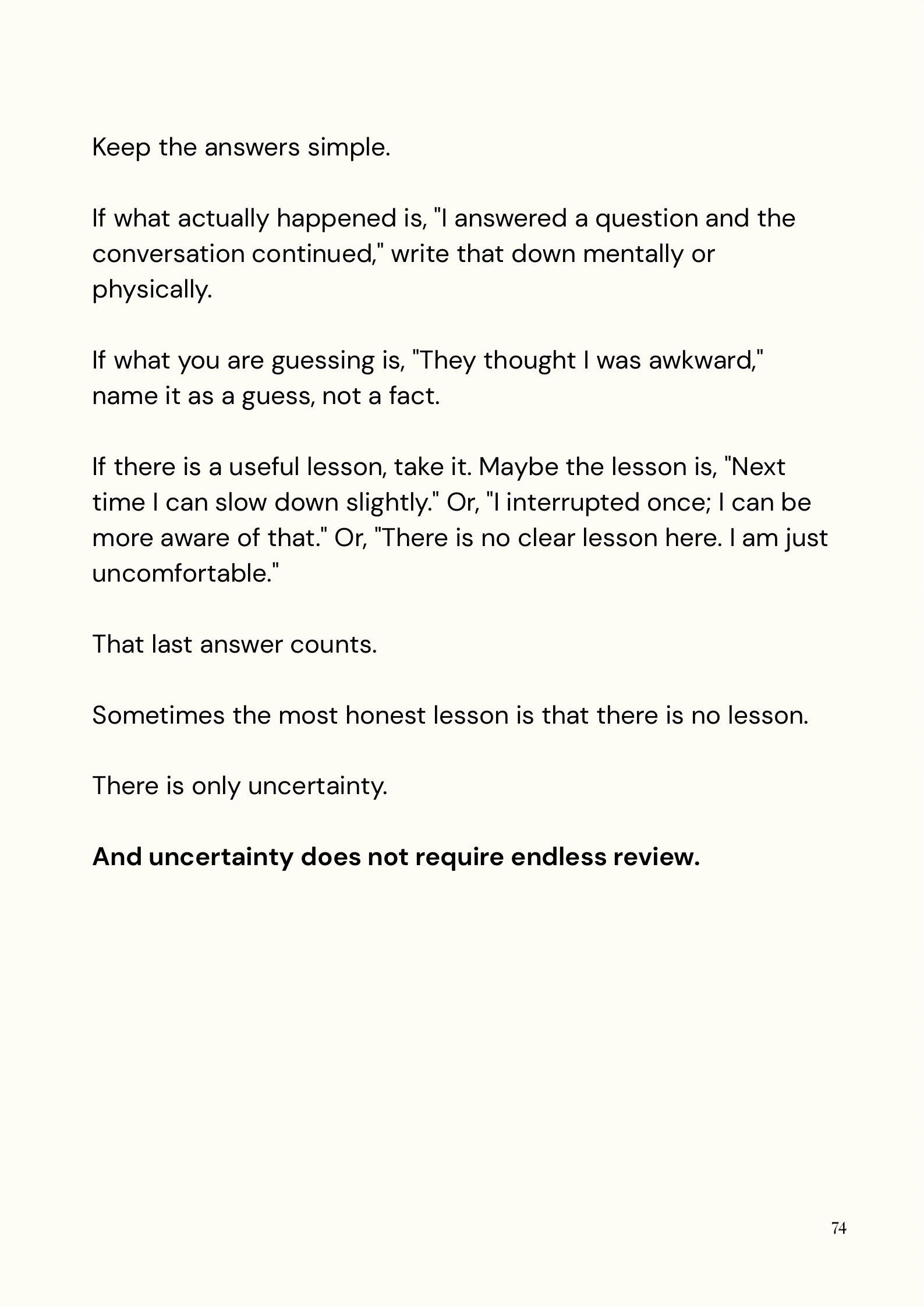
This is the kind of small, specific practice the book explores. You can start with a question you want to ask, a message you want to send, or a moment you’d like to join.

A real page from the book · page 181

A LOOK INSIDE THE BOOK

Something to try when “just be confident” doesn’t help.

The book follows the moments before, during and after a conversation: the words you check, the openings you miss, and the exchanges that follow you home.

You might be comfortable with people you trust, then go blank in a group. Or find that one harmless sentence follows you home. The book gives those experiences words, with reflection questions and small practices you can return to. This page turns that into three questions: where the pattern shows up, what you usually do, and one small response you can practice.

See the book and what comes with it

Start with the part you recognized.

There’s more than one place to begin.

CHAPTERS 2 & 8

The Moment Between Thought And Speech
The Smallest Useful Shift

Look at what happens between having a thought and saying it. Then explore how to choose one manageable response to practice, instead of waiting until you feel completely ready.

See four more pages from the book
View all 12 chapters
  1. The First Rules Your Brain Learned
  2. The Moment Between Thought And Speech
  3. Why The Conversation Follows You Home
  4. Why Groups Feel Different
  5. The Avoidance That Happens Quietly
  6. When Careful Became Identity
  7. Why Awareness Is Not Enough
  8. The Smallest Useful Shift
  9. Confidence Comes After Evidence
  10. Real Situations, Real Practice
  11. When Progress Gets Messy
  12. Building Your Way Forward

WRITE IT DOWN. COME BACK TO IT.

A place to put what actually happened.

After a conversation, it’s easy to remember only the part you’re worried about. The worksheets give you somewhere to record the situation, notice a repeated response, and choose something specific to practice.

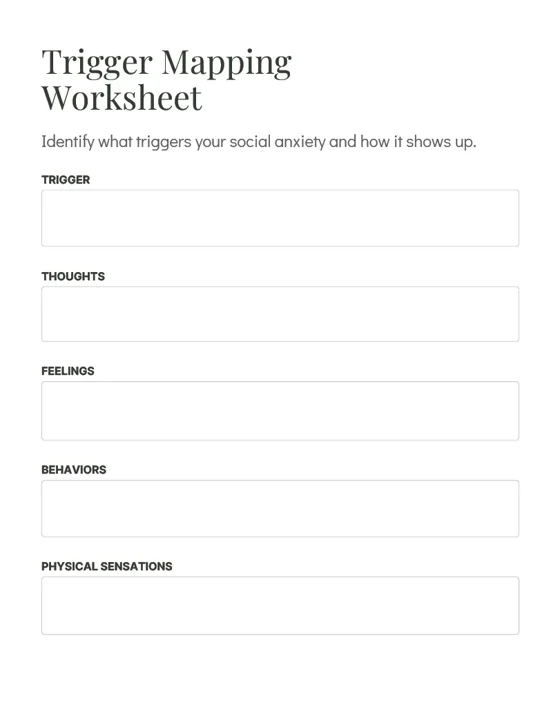
Preview of the included Trigger Mapping Worksheet, with spaces for the trigger, thoughts, feelings, behaviors and physical sensations

Map your triggers

Write down the situation, what went through your mind, how you felt, and what you did.

TRIGGER MAPPING WORKSHEET
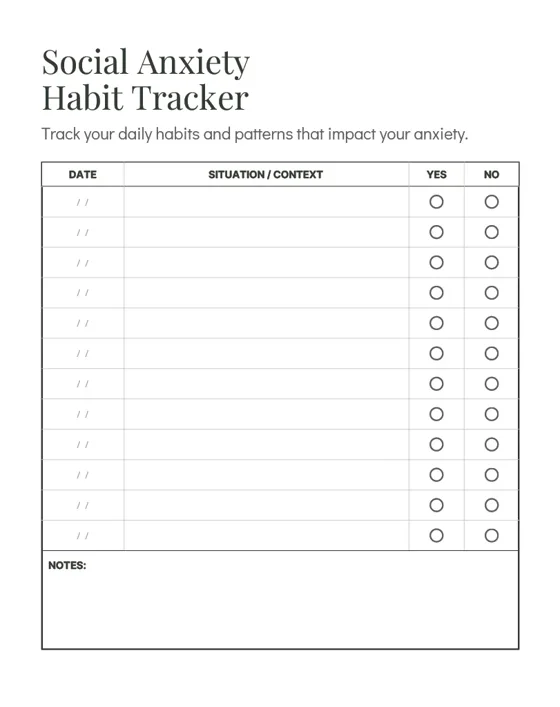
Preview of the included Social Anxiety Habit Tracker, with a daily record and notes

Track your patterns

Keep a record of familiar habits in different situations, rather than relying on the last moment you remember.

SOCIAL ANXIETY HABIT TRACKER
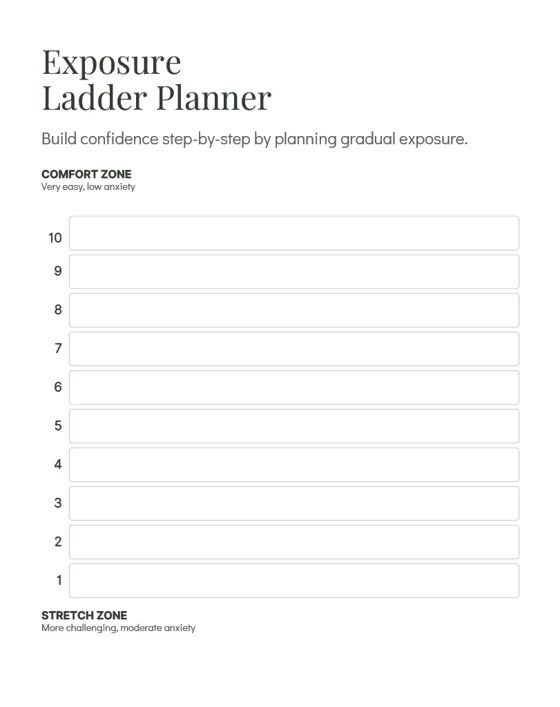
Preview of the included Exposure Ladder Planner, with numbered steps and comfort and stretch zones

Plan your next step

Arrange smaller and more challenging steps on paper. Choose a place to begin that makes sense to you.

EXPOSURE LADDER PLANNER

Also included: the Avoidance Pattern Worksheet, with space to look at what you avoided, its short-term relief, its longer-term cost, and a response you’d like to try.

ONE ORDINARY PLACE TO BEGIN

What would you like to try first?

A question at lunch. The reply sitting in your drafts. A little more of your own opinion with someone you like. Choose a moment you actually care about.

IN CONVERSATIONS

The follow-up question.

You’re interested in what someone said. Practice asking about it while the conversation is still there, instead of waiting for the question to sound perfect.

IN EVERYDAY TASKS

The reply you keep editing.

You’ve said what you mean, but you’re still checking how it might sound. The book looks at choosing a small change in that familiar checking.

WITH PEOPLE YOU LIKE

A little more of your own opinion.

There’s something you’d like them to know about you. Start with an ordinary preference or thought you would usually keep to yourself.

See the reading and practice set
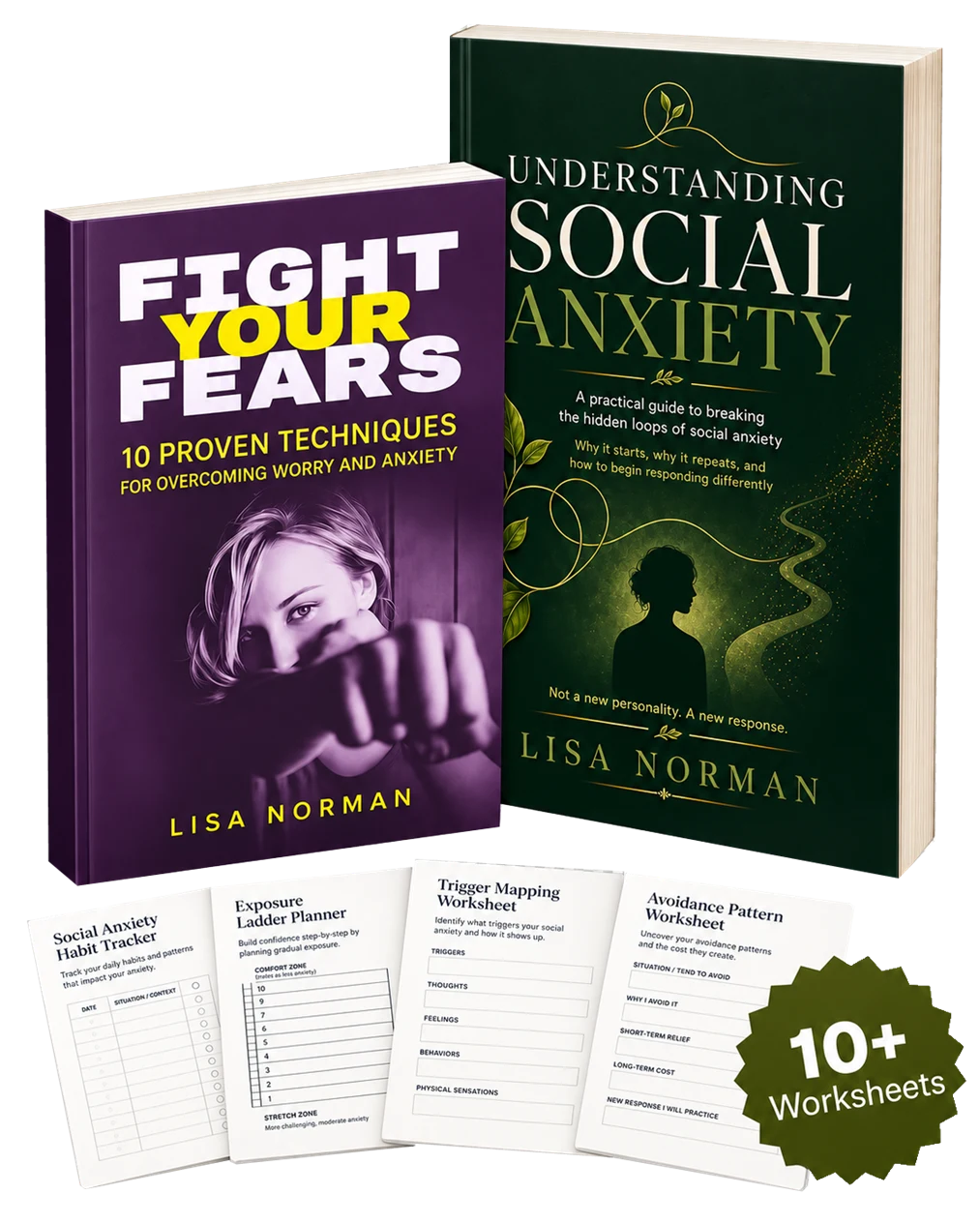
Understanding Social Anxiety, the Fight Your Fears companion guide, and included worksheet previews

Digital downloads. The book images are illustrative mockups.

YOUR COMPLETE READING & PRACTICE SET

Read about the moment.
Choose what to practice.

01

Understanding Social Anxiety

The 267-page digital book, with everyday examples, reflection questions and small practice ideas.

02

Fight Your Fears

The 55-page companion guide. Explore broader fear and worry, including feared outcomes, what you can control, mindfulness and getting support.

03

10+ worksheets to write in and return to

Included worksheets such as Trigger Mapping, the Avoidance Pattern Worksheet, the Exposure Ladder Planner and the Social Anxiety Habit Tracker.

$29One-time purchase
Book, companion guide & worksheets
Get instant access $29

Instant digital access · 60-day money-back guarantee

IN READERS’ WORDS

What they recognized.

“Honestly, this was the first time I felt like I had a next step”

I’d read about social anxiety before, but understanding it and changing how I responded were two different things. This made the patterns easier to recognize and gave me practical steps I could try in real situations.

Amy BogaskiJeffersonville, Kentucky
“It wasn’t just texting. Preparing presentations got me too.”

I’d type a message, rewrite it, delete it, then start again. Presentations were similar. I’d know what I wanted to say, then lose my place or overthink every sentence once people were looking at me. Seeing that pattern explained made me realize how much energy I was spending.

Lisa FenixAtlanta, Georgia
“I kept telling myself it wasn’t serious enough.”

I didn’t have panic attacks or breakdowns. I was just constantly managing, overthinking and avoiding small moments. Because nothing looked dramatic, I kept ignoring it. Seeing that described so clearly made something click.

Alessa DolanNorth Carolina

ONE PLACE TO BEGIN

Pick one moment you’d like to handle differently.

Maybe it’s the question you keep to yourself. Or the reply that stays in your drafts while you try to get it right.

Start with the part of the book that sounds familiar. Use the worksheets to write down what happened and a response you’d like to practice. You can return to the rest when it’s useful.

Get the reading & practice set

$29 · Digital access · 60-day guarantee

What if I’m just quiet?

Enjoying quiet or preferring a smaller group isn’t something you need to change. The useful question is whether you wanted to take part, but kept holding yourself back.

What if I’ve always been like this?

A familiar habit can start to feel like a fixed part of who you are. The book looks at specific moments and responses, so you can decide what you’d like to practice without treating your whole personality as a problem.

What if I already understand what I’m doing?

Recognizing the habit and knowing what to try in that moment are different steps. The book includes a chapter called “Why Awareness Is Not Enough,” followed by small practice ideas you can explore.

What if I’ve tried advice before?

“Just be confident” doesn’t tell you what to do when you’re checking a sentence or waiting to ask a question. The book works through ordinary examples and gives you specific practices to consider in those moments.

Where do I start?

Choose a moment you recognize: a message, a question, or a conversation you wanted to join. Read the relevant part of the book, then use a worksheet to record what happened and a small response you’d like to practice.

Is this a physical book?

This is a digital set. You’ll receive access to the PDF book, companion guide and worksheets after purchase. Read them on a device or print the pages you’d like to write on.

60DAYS

YOUR 60-DAY MONEY-BACK GUARANTEE

Time to read it and see whether it’s useful.

Your purchase includes the 60-day money-back guarantee. Read the book, look through the guide, and see how the worksheets fit the moments you want to work on.

Questions about your purchase? Contact us

A real page from the book

Enlarged sample page from Understanding Social Anxiety

FROM UNDERSTANDING SOCIAL ANXIETY · PAGE 181

The Smallest Useful Shift

To make that practical, use three questions:

Where does this pattern show up most often?

Start with ordinary repetition. Messages. Greetings. Meetings. Calls. Group conversations. The moments after social contact when replaying begins. Do not start with the biggest, most terrifying situation just because it seems more serious. The brain learns through repetition, and repetition is easier to find in normal life.

What is the old response?

Be specific. “I get anxious” is true, but too broad to practice with. What do you actually do? Do you delay? Check? Apologize too much? Stay quiet? Ask questions but never share? Leave early? Replay? Make the response clear enough that you can catch it beginning.

What is the smallest useful new response?

Choose something that teaches the opposite of the old rule.

If the old rule says, “Do not send until you feel certain,” the useful response might be one clarity check and send.

If the old rule says, “Do not speak unless the sentence is perfect,” the useful response might be one simple sentence before certainty arrives.